


Humidity Indicator
Your Professional Humidity Indicator Supplier
Dongguan Weiyi Electronic Technology Co., Ltd.is a specialized enterprise engaged in the production and sales of humidity indicator cards, desiccants, and moisture-proof & anti-static packaging solutions. Our products are widely used in electronic components, PCBs, automotive, food, pharmaceuticals, optical & optoelectronic products, aerospace, chemical industries, and more.
-
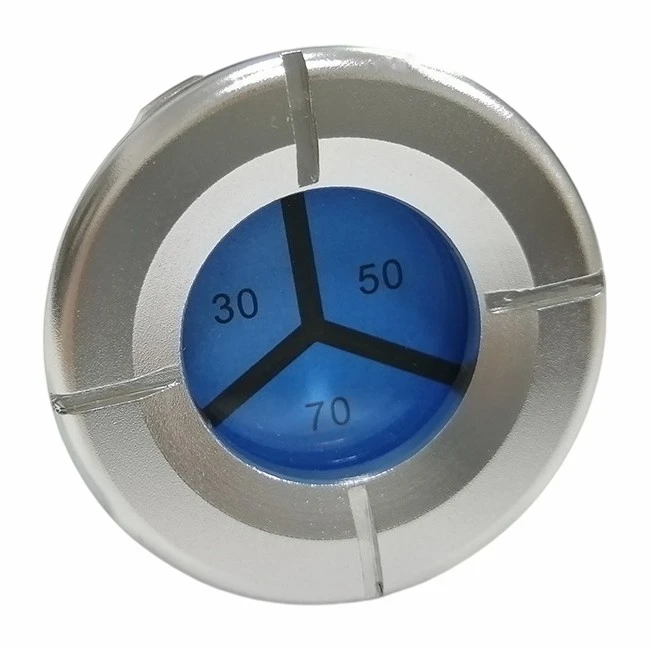
![3-Spot Humidity Indicator]() 3-Spot Humidity IndicatorThis 3-spot humidity indicator (30%-50%-70% RH) is a precision visual humidity monitoring device, designed to be mounted on the outer wall of sealed containers without opening the enclosure. It...read more
3-Spot Humidity IndicatorThis 3-spot humidity indicator (30%-50%-70% RH) is a precision visual humidity monitoring device, designed to be mounted on the outer wall of sealed containers without opening the enclosure. It...read more -
![4-Spot Humidity Indicator]() 4-Spot Humidity IndicatorThe 4-spot humidity indicator operates on the same principle as standard humidity indicator cards, with a threaded design for direct mounting onto the outer wall of sealed containers. Constructed...read more
4-Spot Humidity IndicatorThe 4-spot humidity indicator operates on the same principle as standard humidity indicator cards, with a threaded design for direct mounting onto the outer wall of sealed containers. Constructed...read more


Why Choose Us
Our Certificate
We ISO9001 and SGS certified products compliant with RoHS and REACH international environmental standards.
Custom Solutions Available
Providing over 200 humidity indicator card designs with professional customization services based on customer requirements.
Extensive Industry Experience
Over 18 years of expertise in humidity indicator cards and desiccant manufacturing, specializing in moisture-proof and anti-static packaging solutions.
Strong Manufacturing Capacity
10000㎡ modern production facility with a daily output of 1 million humidity indicator cards for stable and fast delivery.
Capacitive: This linear sensor measures relative humidity from 0% to 100% humidity. It features a metal strip between two electrodes.
Resistive: A resistive humidity sensor has ionized salts between two electrodes. The resistance of the electrodes changes when the humidity level goes up or down.
Thermal: Thermal humidity sensors use two separate sensors, one in a layer of dry nitrogen and the other freely measuring ambient air. The difference between the two measurements is the humidity level.
Specification
|
Item |
Specification |
|
Product Name |
3-Spot Silver Humidity Indicator |
|
Model |
WY-HIP2345Y |
|
Humidity Indication Range |
30% - 50% - 70% RH (3-point indication) |
|
Mounting Diameter |
1.05 in (26.7 mm) |
|
Window Inner Diameter |
0.67 in (17.2 mm) |
|
Pressure Rating |
10 psi |
|
Thread Size |
3/4 - 14 Straight Pipe |
|
Recommended Installation Torque |
30 – 40 in.-lbs. (3.4 – 4.5 N·m) |
|
Maximum Mounting Wall Thickness |
0.23 in. (6 mm) |
|
Main Body Material |
Brass, Zinc Plated |
|
Internal O-Ring Material |
IAW MIL-PRF-6855 |
|
External Gasket Material |
IAW MIL-PRF-6855 |
|
Housing Material |
Silver Aluminum Alloy |
|
Working Temperature |
-20℃ ~ 80℃ |
|
Accuracy |
≤±5% RH (at 24℃ testing environment) |
|
Compliance Standard |
MIL-STD-2073-1 Method 50, AS26860 |
|
Protection |
Leak-proof, Shockproof, Vibration Resistant |
|
Customization |
Humidity indication range can be customized |
Advantages of Humidity Indicator
Increasing energy efficiency: Humidity sensors provide real-time information about the level of moisture in the air so you can optimize the temperature, airflow, and ventilation and reduce your energy consumption.
Achieving precise climate control: When you know current moisture levels, you can make adjustments to environmental conditions and improve occupant satisfaction.
Preventing mold and mildew: A humidity sensor detects excess moisture, which promotes potentially harmful mold and mildew growth.
Maintaining industrial environments: Because humidity levels can affect machinery performance and product quality, industries like pharmaceuticals use sensors to ensure it stays within an acceptable range.
Chemical-Based Humidity Indicator Cards: These indicators use moisture-sensitive compounds that change colour at specific relative humidity levels. Packaging often includes them to provide a quick, non-electronic method of monitoring moisture exposure.
The colour change occurs at predetermined humidity thresholds, offering a simple and cost-effective solution. While convenient, their accuracy can be influenced by external factors such as exposure duration, contamination, and environmental fluctuations.
Electronic Humidity Indicators: Electronic sensors deliver high-precision continuous, real-time humidity readings. Using capacitive or resistive sensing elements, these devices detect changes in humidity and display the data digitally, offering a more accurate alternative to traditional indicator cards.
Advanced electronic sensors can also log historical data, enabling users to monitor long-term humidity trends and implement preventive measures. However, maintaining accuracy requires regular calibration and protection from dust, temperature fluctuations, and potential sensor drift.

Industry-Specific Uses of Humidity Indicators
Electronics and Semiconductor Industry
Electronic components are susceptible to moisture, which can cause corrosion, short circuits, or soldering defects. Humidity Indicator Cards (HICs) are commonly used in moisture barrier bags for electronic packaging, while electronic humidity sensors provide precise monitoring in manufacturing and storage facilities.
Pharmaceuticals and Healthcare
Many pharmaceutical products, including tablets, capsules, and vaccines, require strict humidity control to maintain efficacy. Electronic humidity sensors are integrated into climate-controlled storage units, while chemical-based indicator cards help monitor moisture exposure in individual packaging.
Aerospace and Defense
During storage and transportation, sensitive military and aerospace equipment must be protected from moisture damage. Electronic humidity indicators with data logging capabilities provide real-time monitoring, ensuring compliance with strict environmental standards.
Logistics and Packaging
In supply chain management, humidity indicators help prevent moisture-related damage to goods during transit. Humidity Indicator Cards are placed inside sealed packaging to alert handlers to excess moisture, while electronic sensors are used in cargo containers for continuous monitoring.
Food and Agriculture
Humidity control is essential for preserving perishable goods, including grains, dried foods, and packaged snacks. Electronic humidity monitors in warehouses and cold storage ensure proper conditions, while chemical-based humidity indicators in sealed packaging help detect moisture exposure.
Museums and Archives
Humidity fluctuations can damage historical documents, artwork, and artefacts. Electronic humidity sensors with data logging provide precise climate control in museums and archival storage, while humidity indicator strips offer a simple visual reference for monitoring humidity levels.
As one of the most experienced humidity indicator manufacturers and suppliers in China, we have world-leading production equipment and strong manufacturing capabilities. Please feel free to wholesale high quality humidity indicator made in China here from our factory. Customized orders are welcome.
moisture indicator card, humidity cards, humidity indicator strips