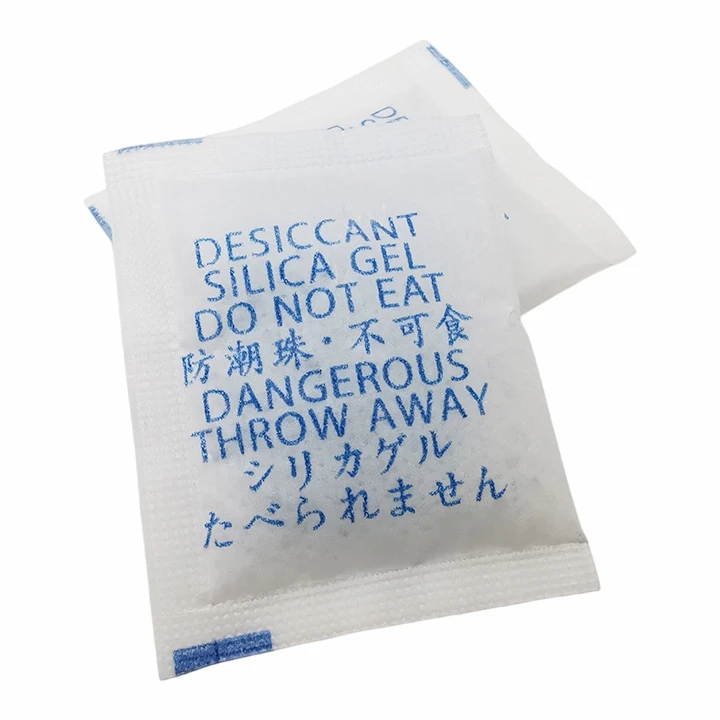

The shape of desiccants varies depending on the type, primarily due to their material and manufacturing process. Below are typical appearances of several common desiccants:
Silica Gel Desiccant: Typically appears as transparent or translucent, irregularly shaped small spherical particles, generally 1-3 mm in size. Some products add cobalt chloride as a humidity indicator; it is blue when not absorbing moisture and turns pink after absorbing moisture. It has a smooth surface, a porous structure, and feels hard but is brittle.
Calcium Chloride Desiccant: Mostly appears as white, porous lumps, granules, or irregular beads. It is highly hygroscopic and gradually deliquesces and transforms into a gel-like liquid after absorbing moisture. Commonly used for industrial moisture control or in large packaging.
Mineral Desiccants (e.g., montmorillonite, attapulgite): Appear as grayish-white, yellowish-brown, or grayish-brown small particles, typically 1-4 mm in diameter, irregularly shaped, and relatively hard. These desiccants are made from natural minerals and resemble fine sand or gravel in appearance.
Quicklime desiccant (calcium oxide) is a white, lumpy or powdery solid. It undergoes a chemical reaction upon absorbing moisture, expanding in volume and releasing heat. Commonly used in food packaging requiring high-efficiency drying, it is gradually being replaced due to safety concerns.
Fiber desiccant resembles thick paper or fiberboard in shape and can be cut or stamped into desired forms. It is frequently used in packaging for pharmaceuticals, health products, and other products with high safety requirements. It remains solid after absorbing moisture.